IgoUgo

Things To Do in London

Back to Tower of London

Tower of London Reviews

Tower Hill, London, England EC3N 4AB

Featured Review : This is London's original royal fortress by the Thames. It is over 900 years old and contains the Crown Jewels. It is guarded by Beefeaters or Yeomen of the Guard as they are formally known and is a World Heritage site...See Full Review

  • Hours:Mar.-Oct., Tues.-Sat. 9-6, Sun. and Mon. 10-6; last admission at 5:30. Nov.-Feb., Tues.-Sat. 9-5,... Read More
  • Price:£16
  • Not right?Update Address | Change Photo
  • #1 most popular
    thing to do in London
  • Avg. User Rating:
    5 out of 5 stars

Nearby Things to Do

London Underwriting Centre
User Rating: 2 out of 5
All Hallows Barking-by-the-Tower
User Rating: 2 out of 5
Billingsgate
User Rating: 2 out of 5
Paul Patisserie
User Rating: 2 out of 5

Popular London Hotels

K+K Hotel George
User Rating: 4 out of 5
City Inn Westminster
User Rating: 4 out of 5
Rubens at the Palace
User Rating: 4 out of 5
The Royal Horseguards
User Rating: 4 out of 5
Holiday Inn Kensington
User Rating: 4 out of 5

Popular Things to Do in London

Tower of London
User Rating: 5 out of 5
National Gallery
User Rating: 5 out of 5
British Museum
User Rating: 5 out of 5
Imperial War Museum London
User Rating: 4 out of 5
St Paul's Cathedral
User Rating: 4 out of 5
  • Tower of London

  • 5 out of 5 stars
    Joy S from Manchester
  • April 23, 2025
  • Best of IgoUgo
Quote: Tower of London Photo - Tower of London, London, England This is London's original royal fortress by the Thames. It is over 900 years old and contains the Crown Jewels. It is guarded by Beefeaters or Yeomen of the Guard as they are formally known and is a World Heritage site. It is also considered by many to be the most haunted building in the world. It was founded by William the Conqueror in 1066 and has been enlarged and modified by various sovereigns. Today, it is one of the world's most spectacular fortresses.

The Tower of London has macabre associations with legendary figres imprisoned and/or executed here. Centuries after the last head rolled on Tower Hill, a shivery atmosphere of impending gloom lingers over the Tower's walls. People say it is the most haunted spot in England - headless bodies, body less heads, phantom soldiers, icy blasts, clanking chains - you name them, the Tower has got them. Every stone of the Tower of London tells a story - usually a gory one.

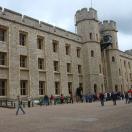
The sprawling fortified compound is like its own small city, with a walled moat outside and a spacious, grassy keep inside. At the centre is the oldest part - the White Tower, built by William the Conqueror to keep London's native Saxon population in check.

For centuries the Tower of London was a royal residence. One section, fronting onto the river, recreates the era of Edward I with reproduction furnishings, including the throne of Edward I. When James I took over from Elizabeth I in 1608, the royal family moved out. This was understandable, as over the years, the Tower had come to be the country's most important prison.

There are lots of grim and spooky things to see and find out throughout the Tower. On the walls of Beauchamp Tower, you can still read the last messages scratched by despairing prisoners. According to legend, two little princes - the sons and heirs of Edward VI - were murdered by henchmen of Richard III in the Bloody Tower. In the lower part of the Bell Tower, you can tour a whitewashed cell where it is believed Sir Thomas More lived for the last 14 months of his life. Sir Walter Raleigh spent 13 years here when he was out of favour with Elizabeth I.

Many prisoners arrived by boat through the spiked iron portcullis of Traitor's Gate and were publicly executed in the central courtyard on Tower Green. A plaque there commemorates the executn of two of Henry VIII's wives - Anne Boleyn and Catharine Howard, as well as the Nine Day Queen - Lady Jane Grey.

The Tower was also a great place to store weapons and treasures. The White Tower today holds the Armouries, with an impressive display of weapons and armour. In the Jewel House, you will find the Tower's greatest attraction - the Crown Jewels. These are some of the world's most precious stones, set into robes, swords, sceptres and crowns. You can see the Imperial State Crown - the most famous crown on earth, made for Queen Victoria in 1837. It is worn by Queen Elizabeth II when she opens Parliament. The Imperial State Crown contains the Black Prince's Ruby - worn by Henry V at Agincourt, as well as 3,000 other jewels.

You will have to stand in a long queue to catch a glimpse of the crown as you go past on a moving walkway. The wait is well worth it. The queue also moves fairly quickly, and at various places you are shown films of the Queen's coronation, the State Opening of Parliament etc. so you see when the jewels are worn. The jewels are in glass cases and you go past on a moving walkway, but you can go back on the walkway as many times as you like. There is also a raised area where you can view them from a higher spot. You are not allowed to take photographs.

When you arrive at the Tower of London, head for the Welcome Centre where you will get information, maps etc for what to see and do.

Join one of the Beefeater Tours which begin near the main entrance every 30 minutes - this is a must-do. They last one hour and visitors are regaled with tales of intrigue, imprisonment, torture and execution. You can leave at any point if it is too much for your children. The Beefeaters are all retired Sergeant Majors from the British Army, and as well as providing guided tours, the provide ceremonial security. Our Beefeater had a dry and witty sense of humour and really made the history come alive.

Watch out for the Crown Jewel Guardsmen - real life soldiers from various regiments in the army, who open the Tower with a special ceremony at 9am and at 2:50pm they collect the secret password to get into the Tower after dark.

Be sure to look out for the ravens. There are 6 of them, plus 2 spares. They are registered as official Tower residents. According to legend, the Tower will stand as long as these black birds remain, so, to be on the safe side, one of each of their wings is clipped. The ravens live next to the Wakefield Tower. They are the only animals left at the Tower - kings and queens used to keep much larger animals here, including lions and elephants.

The entrance cost is £17 for adults and £9.50 for children. We bought our tickets on the internet and saved £5.00 - it also means you do not need to queue at the ticket offices. Opening hours are 9:00-17:30. Arrive as early as you can. The tube stop is Tower Hill. We arrived at 10:30 and left around 4pm and managed to see just about everything.
From journals 4 Days in London
  • A must-see attraction in England

  • 5 out of 5 stars
    happysh2009 from Tunbridge Wells
  • December 17, 2025
  • Best of IgoUgo
Quote: The Royal Armouries Photo - Tower of London, London, England The Tower of London is described as the heart and soul of England. The official name of The Tower of London is Her Majesty's Royal Palace and Fortress, but it is more commonly known as the Tower of London and historically as The Tower.

The Tower of London is a complex of several buildings built over the last thousand years set within two concentric rings of defensive walls, which in turn are surrounded by a moat.

Tower of London history dates back to Roman time. In 1066 William The Conqueror landed in England and won the crown of England after beating King Harold. To help control London as well as England William The Conqueror built the White Tower. Over the following 900 years the White Tower has been extended and used as a royal palace, state prison, the Mint, a record office, observatory and zoo.

Currently, The Tower of London is cared for by Historical Royal Palaces and is open all year to the general public as one of top places to visit in London.

(1) Bloody Tower

The Bloody Tower is the most infamous tower. It's believed the Duke of Gloucester, later to become King Richard III, imprisoned and killed his two young nephews, the princes who were the rightful heirs to the crown. Another sad story was linking with the famous English sailor, Sir Walter Raleigh. From 1603 to 1616 he remained in the Bloody Tower as a prisoner. During the time he wrote the first volume of The Historie of the World about the ancient history of Greece and Rome.

(2) Queen’s House

Queen's House is a brown structure with white windows. Queen's House was built around 1530 with typical Tudor style, trimmed with wood. It survived the Great Fire of London of 1666 and is well preserved.

That said Henry VIII built the Queen's House for his second wife, Anne Boleyn. Anne Boleyn arrived the Tower through the Traitors gate and was soon afterwards beheaded. In 1608, at Queen’s House Guy Fawkes was made to confess his plot to blow up the Houses of Parliament with gunpowder.

(3) Tower Green

The Tower Green is located in front of Queen’s House and Beauchamp Tower. Because beheading in the privacy of the Tower Green was considered a privilege of rank, so in fact not many people were killed there except two English Queens and other five British nobles. Most prisoners in the Tower were executed in public on Tower Hill just outside the fortress.

(4) Beauchamp Tower

The Beauchamp Tower was built by Henry III and his son, Edward I, but takes its name from Thomas Beauchamp, Earl of Warwick, imprisoned 1397-99 by Richard II. The three-storey structure was built for defensive purposes but used often for prisoners of high rank

(5) Crown Jewels

The Jewel House is one of the big draws at the Tower of London. At Jewel House the objects used by the sovereign of the United Kingdom during the coronation ceremony and at other state functions are displayed. Tower of London crown jewels include the crowns, sceptres, orbs, swords, rings, spurs, and the royal robe or pall, as well as several other objects connected with the coronation ceremony. Every treasure there is priceless, but the most famous two are the 530-carat Star of Africa and Koh-i-Noor diamond.

(6) White Tower

White Tower is right in the centre of the Tower of London and is a high stone building. White Tower is one of the oldest remaining parts in the Tower and was built for William The Conqueror in 1100. That marks the start of the Tower of London’s history as both a palace and a fortress. Today it houses displays about the Royal Armouries’ collection and the Mint history.

(7) The Medieval Palace and South Wall Walk

On the opposite site of the Bloody Tower there is an entrance to The Medieval Palace and South Wall Walk, which starts from St Thomas Tower. The Medieval Palace contained fabulous interiors used by medieval kings and queens during their frequent but short visits to their most important fortress. At the South Wall you can have a look at Thames river, the Tower bridge and hotels near Tower Bridge.

Extra information:

Tower of London opening times are from 9:00 till 17:30 from Tuesday to Saturday; from10:00 till 7:30 on Sunday and Monday.

Tower of London tickets are £17 for adult, £14.50 for full-time students and senior citizens, and £9.50 for children under 16, children under five free of charge. Tickets may be purchased at the Tower itself, at any London Underground station or online. Generally you can get Tower of London offers via internet.

It’s very easy to get Tower of London: by bus, tube, taxi and Thames clippers, etc. There are many hotels near Tower of London too. If you want to see Tower of London ghosts you can come to the ceremony of the Keys that takes place every night at the Tower.

From journals 2011 Journal 1

Popular Hotels Near Tower of London

  • An Iconic Fortress and Must See Attraction

  • 5 out of 5 stars
    Cindy Grant from Petersburg
  • October 16, 2025
  • Best of IgoUgo
Quote: Tower of London Photo - Tower of London, London, England The Tower of London was first built in the early 1080's by William the Conqueror, and was added to by countless monarchs. The White Tower was built first, followed by St. Thomas's Tower, and Tower Wharf. There are many must sees here:

The White Tower is made up of the four turrets that are the highest part of the fortress.
The Yeoman Warders, also called "Beefeaters", who are part of the Queen's guards, and entertain visitors every 30 minutes with stories.
The Crown Jewels
The Ravens - legend has it that if the ravens ever leave the Tower, the kingdom will fall.
The Fortress itself, including the battlements.
The Tower Green, where criminals of privilege were executed in private.
The East Wall tour, where you can see the graffiti written on the walls by prisoners.
The Medieval Palace, located in St. Thomas's Tower.

Ghosts include many of King Henry VIII's wives, and even a bear! There are stories of people being buried here, of children disappearing, of Crown Jewels being almost stolen. Costumed actors tell stories and help with the history lesson.

There is also a large gift shop!

www.hrp.org.uk/toweroflondon/
opens at 9 or 10 am, and closes 4:30 or 5:30 pm
18.70 pounds adult ($30.02) and 10.45 child ($16.78), discounts for online purchase
From journals Ghostour
  • The Tower of London------Kings, Queens and Queues(2)

  • 5 out of 5 stars
    happysh2009 from Tunbridge Wells
  • August 27, 2025
  • Best of IgoUgo
Quote: Photo of London, England (6) White Tower

Leaving Crown Jewels and walking downwards, right in the centre of the Tower, there is a high stone building, well known as White Tower due the colour. It is one of the oldest remaining parts in the Tower and was built for William The Conqueror in 1100. That marks the start of the Tower of London’s history as both a palace and a fortress. Today it houses displays about the Royal Armouries’ collection and the Mint history.

My observations: Different from other towers The White Tower is a massive construction with spacious halls. To many visitors the armour of Henry VIII probably is the most impressive, but to me a small armour for child was the most unforgettable one. There are a lot of interactive activities. I tried to take a weapon and found it very heavy. It’s also educative to discover the development of British currency.

(7) The Medieval Palace and South Wall Walk

On the opposite site of the Bloody Tower there is an entrance to The Medieval Palace and South Wall Walk, which starts from St Thomas Tower. The Medieval Palace contained fabulous interiors used by medieval kings and queens during their frequent but short visits to their most important fortress. At the South Wall you can have a look at Thames river and the Tower bridge. At the end there is a diamond display exposing more details of coronation crowns.

My observations: Walking through narrow corridors from one room to another I was surprised to see the rich colours and comfortable furnishings in Medieval times. The re-creating Edward’s dramatic bed was noticeable, but a small church inside was most appealing to me. I also enjoyed standing on the wall to watch a live show, performed by two actors in another tower.

Above I mentioned the main sites I have seen. In fact I also visited the Royal Regimental Fusiliers’ museum and watched the famous ravens at the green land in front of White Tower. The daily event I came across was about the English Civil War. It was really fascinating to see how they cooked and how they fought 400 years ago. However due the time limit I didn’t come to the ceremony of the Keys that takes place every night at the Tower.

Summary:

I really enjoyed my visit to the Tower. It’s entertaining and informative. It gave me a big picture about British history. I would like visiting it again in future.

I also would like to recommend anybody to the Tower if you do visit London. It is open daily. From Tuesday to Saturday it opens from 9:00 till 17:30. On Sunday and Monday it opens from 10:00 till 7:30. The entrance ticket is £17 for adult, £14.50 for full-time students and senior citizens, and £9.50 for children under 16, children under five free of charge.

Tickets may be purchased at the Tower itself, at any London Underground station or online. To save time I booked my ticket on line, but found I just spent £16. I also booked my audio guide that is £4 for adult and £3 for concessions. To have a proper visit I highly recommend the audio guide, that is the best tour guide I have used so far. It’s very easy to get there: by bus, tube, taxi etc. Personally I bought Thames clippers daily ticket and got there by boat.

There is a restaurant called New Armouries Restaurant that provides refreshments and full lunch. I had my lunch there and think it’s not bad. The food was priced reasonably and cooked freshly. The service was efficient and the dining room was big enough. However better take some snack with you because it’s really a tiring journey. I can’t remember how many steep stairs I up and down, but I was really excited to find a bench to have a break. There also a few shops for shopping.

At last I would like to mention the staff that work at the Tower. Most of them were really friendly with visitors, but one small thing happened at the end changed a little bit my impression. When I finished my visit at the Jewel House, I attempted to go a toilet nearby, but was told it is closed and you can go to the one near the exit. However when I reached the exit I was told by another staff that this one is closed too. At the same time I saw similar things happened with other visitors. To be honest I feel embarrassed to mention the small thing, but I was really surprised with it. I have travelled a few places in China and the UK it is my first time to experience the situation. I suppose the daily huge visitors there make them want to close the Tower as soon as possible. So it’s no surprise I titled my article as The Tower of London------Kings, Queens and Queues.

From journals big attractions around Kent and London

Popular Hotels Near Tower of London

  • The Tower of London------Kings, Queens and Queues(1)

  • 5 out of 5 stars
    happysh2009 from Tunbridge Wells
  • August 27, 2025
  • Best of IgoUgo
Quote: Photo of London, England The Tower of London is considered to be a must-see attraction when visiting London. Although I have visited London regularly over the last 3 years Sunday, 30 May was my first chance to see this famous site.

Brief history:

The Tower of London is described as the heart and soul of England. Its official name is Her Majesty's Royal Palace and Fortress, but it is more commonly known as the Tower of London and historically as The Tower. It is often identified with the White Tower, however as a whole it is a complex of several buildings built over the last thousand years set within two concentric rings of defensive walls, which in turn are surrounded by a moat.

Going back to Roman times and beyond there were already fortifications on this site. In 1066 William The Conqueror landed in England and after beating King Harold won the crown of England. To help control London as well as England he built a new fortress, some parts of which rest on Roman foundations. The fortress became known as the White Tower. Over the following 900 years the White Tower has been extended and added to subsequently becoming a royal palace, state prison, the Mint, a record office, observatory and zoo. Today it is cared for by Historical Royal Palaces and is open all year to the general public.

What can you see?

Once you have passed through the main entrance at Byward Tower you are free to visit whichever parts of the attraction you like. Nearby the entrance there is a Yeoman Warder tours’ site from where you can join a tour party guided by a Beefeater, who will take you on 60 minute tour of The Tower. However I had pre-booked an audio guide on-line so I decided to discover The Tower in my own way utilising this very useful tool.

After walking through Byward Tower you will see a tall wall on your left. From the stones’ colour you can figure out Tower of London is not built in one day. On your right side you can see a water lane and a Traitors gate, in front of which are Bloody and Wakefield Towers, respectively.

(1) Bloody Tower

The Bloody Tower is the most infamous tower. It's believed the Duke of Gloucester, later to become King Richard III, imprisoned and killed his two young nephews, the princes who were the rightful heirs to the crown. Another sad story was linking with the famous English sailor, Sir Walter Raleigh. From 1603 to 1616 he remained in the tower as a prisoner. During the time he wrote the first volume of The Historie of the World about the ancient history of Greece and Rome. At the ground floor you can see what his life was like as well as the book. At the first floor you can find out more about the two young princes.

My observations: I was shocked to hear Sir Walter Raleigh actually had a son who was born here. When I saw the pictures of the young princes in the small room, after climbing the steep stairs I felt more sad.

(2) Queen’s House

To the left of the Bloody Tower can be seen a brown structure with white windows that is the Queen's House, which was built around 1530 with typical Tudor style, trimmed with wood. It survived the Great Fire of London of 1666 and is well preserved. Today the head of The Tower lives there and a guard is placed at the door.

That said Henry VIII built the Queen's House for his second wife, Anne Boleyn. However she was soon afterwards beheaded by him at the Tower Green. Later, in 1608, at Queen’s House Guy Fawkes was made to confess his plot to blow up the Houses of Parliament with gunpowder.

My observations: The name of Anne Boleyn was mentioned a few times during my trip. Obviously she was a key figure in the history of the Tower. She arrived the Tower through the aforementioned Traitors gate. I supposed at the moment she would never foresee the upcoming beheading. I have my deep sympathy for her, but I don’t understand her last statement before she died, in which she still wished the king controlling the country for ever. I also don’t understand why the Tower let their staff live there rather than open it for public.

(3) Tower Green

The Tower Green is located in front of Queen’s House and Beauchamp Tower. Because beheading in the privacy of the Tower Green was considered a privilege of rank, so in fact not many people were killed there except two English Queens and other five British nobles. Most prisoners in the Tower were executed in public on Tower Hill just outside the fortress. Today at the Scaffold site there is a small sculpture to commemorate the died.

My observations: If I didn’t see the grass land in person I would not believe such scary beheading happened there. I was trying to walk slowly and quietly. I also wished they have the permanent peace and the repeat happens nowhere in the world.

(4) Beauchamp Tower

The Beauchamp Tower stands on the west green. It was built by Henry III and his son, Edward I, but takes its name from Thomas Beauchamp, Earl of Warwick, imprisoned 1397-99 by Richard II. The three-storey structure was built for defensive purposes but used often for prisoners of high rank. At the ground floor you can read prisoners’ stories with their pictures. At the first floor you can see many inscriptions carved on the stone walls by prisoners.

My observations: I heard a few sad stories about the prisoners there, but the most surprised one is about the Lady Jane Grey, who was Queen of England for just nine days from Monday 10th July 1553 to Wednesday 19th July 1553. She watched her husband go from the Beauchamp Tower to his death on Tower Hill. A few hours later she was executed on the Green and she was just 17 years old.

(5) Crown Jewels

Leaving Beauchamp Tower and walking upwards you can see a guard standing in front of a building called the Jewel House. It is one of the big draws at the Tower of London because there you have the chance to see Crown Jewels, which refers to the objects used by the sovereign of the United Kingdom during the coronation ceremony and at other state functions. Not only can you see the crowns, sceptres, orbs, swords, rings, spurs, and the royal robe or pall, as well as several other objects connected with the ceremony itself, but also you can watch the Queen’s telly coronation ceremony. Mind you it’s a working museum that means at some particular days the Queen will use her crown for opening parliament meeting every year. Every treasure there is priceless, but the most famous two are the 530-carat Star of Africa and Koh-i-Noor diamond.

My observations: it was the highlight of my visit. When I entered the Tower I first popped over here and returned to it when I finished other sites. I was pleased to see these delicate and beautiful treasures and listen to the stories behind them. Believe or not I totally walked around the crowns for six circles because I had the difficulty to figure out Star of Africa due the shining light from these diamonds. If the staff didn’t show me the closing time I’m sure I would spend more time on them. Anyway in case the staff became suspicious of my intentions I had to say goodbye to these crowns, being the last couple visitors on the day. It would be interesting to see one day somebody challenge their safety system. Don’t feel nervous. This astonishing collection has been on public display at the Tower since the 17th with only one attempt to steal them.


From journals big attractions around Kent and London

Popular Hotels Near Tower of London